Thursday, August 20, 2015

Bug Safari 2015 - Northern Arizona

I've been so busy lately that this blog was neglected. Lots of reasons. At least half a dozen public talks about our insect fauna needed to be prepared and presented. This is also the main season to collect bugs for breeders and scientists, so hundreds of ants and beetles had to be packed, shipped, declared ... Parties for entomologists like Pat Sullivan's Infestation came and went. An exciting new project with Art Evans involving my beetle photos is taking shape.

Navajo Horses. watercolor from an earlier trip north
But most of all, I got to spend several days in the field with a few of my best naturalist/entomologist friends. Robyn Waayers came from San Diego County,  Alice Abela and Aaron Shusteff all the way from northern CA.

Oak Creek Canyon, West Fork, Sedona, AZ
We all are very fascinated with the wonders of SE Arizona and we all had been there several (or many in my case) times. So this year, we headed to northern Arizona instead, knowing that the species and individual numbers of insects might be lower there, but all of us would find something new and probably unexpected. Luckily, Derek Uhey, a resident researcher of the NAU Forestry Department, invited us to join him at some of the research sites he knows so well.

Mydas xanthopterus
After settling in at Clear Creek Campground in the Verde Valley, our first excursion took us through terribly touristy and congested Sedona to Oak Creek Canyon's West Fork trail head. I have described the beauty of this area in another blog. This time, we did not get very far because our progress is slow: we turn over over just about every leaf along the path, check behind most sand corns, definitely look at every flower.

Eastern Box-elder Bugs, Lixus semivittatus, Asclera ruficollis (Red-necked False Blister Beetle), Paraphidippus aurantius, Bombus hunti
 Also, it was late in the day, especially for a shady canyon. But besides watching some crepuscular beetles, we soon discovered that sleeping bumble bees have a lot of charm and offer many photo ops. Hard to believe that Alice and I still found time to stuff ourselves with delicious black berries!  Aaron and Robyn indulged in a bath in Poison Ivy instead, but since nobody came down with any symptoms, our botanical knowledge seems to be lacking?


Black lighting at Clear Creek Campground attracted  mostly old acquaintances from southern Arizona. This also turned out to be our last night with temperatures warm enough to bring in multitudes of insects, the moth Eudesmia arida being the dominant species.

Derek, our local expert with his (or Hayduke's?) trusty blue Jeep. Photo by Robyn Waayers, another Abbey fan

Zygogramma continua, Collops bipunctatus (Two-spotted Melyrid), Megaphorus sp., Arethaea (Thread-legged Katydid)
In the Flagstaff area we followed Derek to one of NAU's garden arrays in a formerly heavily grazed, lava rock-rich habitat.  Garden arrays are fenced, controlled test sites where the progress of original vegetation and also of planted trees under the influence of the changing climate is monitored. Insect studies are mainly performed by pit trapping (Derek's amazingly demanding project), so with swipe net, cameras and simply gleaning we may have added a few species to the lists.

Next we headed towards the San Francisco Peaks, to a research site below Snow Bowl Ski resort.  A disturbed area along the road was covered in blooming thistles and made us curious enough to stop.

Bombus morrisoni (photo Derek Uhey)
 Were they native? Was this a field to grow bird seeds? We did not find out. Like most monoculture sites, this one did not offer too much of interest, but the bumble bees were of amazing size.

San Francisco Peaks, Arizona' highest
We then drove through miles of pine forest to our target site within a nature preserve. A beautiful mountain meadow surrounded by aspen and pines was rich in blooming yellow Sneeze Weed that was past its prime but still attractive to many interesting flies and bumble bees.

Chaetorellia sp., Xanthoepalpus bicolor, other tachinid, bumble bees
We camped outside the preserve at the border between open meadows and pine forest. While we set up camp, Common Night Hawks entertained us with loud nasal shrieks that I had never heard before. Then it got cold. We brought out all our warm clothes and feared that no insects would show.

Trichocnemis spiculatus neomexicanus          Alice, Aaron and me (Photo Robyn)                       Tragosoma harrisii
Alice, undiscouraged, laid endless trails of cereal. To me, she seemed to turn into a fairy tale character, and darkling and ground beetles as well as many camel crickets soon fell for her magic.

Catocala grotiana ,Pseudohemihyalea ambigua, Estigmene albida, Hypercompe permaculata (Many-spotted Tiger Moth) Bertholdia trigona (Grote's Bertholdia), Lophocampa ingens, Grammia williamsii
But our lights also were successful despite the low temps. I guess bugs that live up in the Flag area are used to the cold. From the coniferous forest we drew some large Cerambycids. Moths in the family Eribidae which now includes the Tiger Moths added a lot of color. I saw my first Pandora Moth.

At Navajo Bridge
The next morning we made our way towards the North Rim of the Grand Canyon. We drove through some of the most amazing red rock and badland country of the Navajo Reservation without stopping or photographing. Did I mention that our lead driver had just been on a trip through Utah's Canyon Lands and got oversaturated with that kind of beauty?  We also thought that on the way back ....

Nankoweep
This week our newspaper reported record tourist crowds that choked traffic at the South Rim of the Grand Canyon. We saw none of that. With the famous cookie shop inn in Jacob Lake, we left all of it behind. The mixed conifer forest was majestic the dirt roads were empty. At Nankoweep, our first choice camp site right on the rim was taken, but with three tents plus Derek's hammock  we were better off some 50 m from the rim anyway. Promising wild flowers, fallen trees with loose bark, thickets of raspberry bushes - the site was ideal and seemed very rich. But rather soon, dramatic storm clouds were rolling through the canyon, obscuring parts of the incredible view. Derek, experienced with the land, pointed north, away from the Canyon: those clouds were coming right at us. We put up lights at protected spots among Aspen and Alice laid her cereal trail.

If Alice had not forgotten to bring the white table cloth, her cereal buffet would have looked like this
We got little, but what came was good. Before turning in for the night we still had to move Robyn's and my big coolers, full of of food and bugs, from Robyn's canvas-top truck into Alice's sturdier vehicle - it's bear country after all. Derek sang us to sleep accompanied by Aaron's tiny traveling guitar. During the howling storm and pelting rain of the night, poor Derek in his hammock did not get a lot of rest and no bear ventured out.

Canyon view in the morning
 In the morning Derek had to visit his research sites in the area but we did not, as planned, accompany him; the weather was just too bad. So we looked longingly through our truck windows at beautiful wildflowers nodding with dripping wetness and searched  the road in front of us for salamanders - shouldn't they, at least, be out and about in this weather? Very impressive lightning strikes close by. Robyn raised the question if it's really safe in a car? I chose to firmly believe in Faraday's cage right then and there.


Charlie Brown Blister Beetle and Pandora Moth
We stopped for breakfast at Jacob Lake and found the outside walls covered in Pandora Moths and a few good beetles - those had come to the lights of the gas station at night. Definitely a spot to spend some more time, next time.

I wanted to look for Sage (Artemisia sp.) specialists on the way back, but again, the rain got us as soon as we left the cars.

 Beautiful red rocks shrouded by rain, no photo stops possible on this leg of the trip.

At the Little Colorado River: next to the water the sandy area where the tiger beetles would be.  Between Aaron and the cliff dead and dying Tamarisk trees all along the river
Aaron knew about a rare Tiger Beetle on the banks of the Little Colorado River. No access at Navajo Bridge, but more luck at Cameron. We did not get the Tiger (who was probably hiding from howling wind and pelting rain). But we were hardly out of the trucks when Robyn pointed: 'Weren't you looking for those bio-control leaf beetles that kill tamarisk?

Diorhabda carinulata (Northern Tamarisk Beetle)
 That tree does not look too good!' The tree turned out to be literally covered in beetles. As I described in one of my first blogs,  Tamarisk is an introduced, invasive tree that displaces many riparian plant communities. Efforts to fight it with beetles and scale insects introduced from its countries of origin have proven to be successful in Colorado and Utah. In AZ the release of the 'agents' was not allowed: The birding community feared for the protected Willow Flycatcher that had switched in some areas to breeding in Tamarisk. Some Tamarisk thickets also offer resting places to large concentrations of migrating birds, and birders do not want to loose those great observation opportunities. Another argument was that mature, established Tamarisk thickets would have made the soil permanently unsuitable for willows and other pioneers due to salt accumulation. The question arises of course if it is better then to let the invasive trees spread unchecked? So no leaf beetle release in AZ. Well, the bugs do not respect state borders - they are here. And they are chewing up Tamarisk. Being established in flood planes and riparian corridors, they will probably spread throughout the state pretty quickly. Lets hope that the results are catastrophic only for the invasive Tamarisk.


Going through Flagstaff, we encountered down-poors so strong that the windshield wipers threatened to give up.  And no silver lining anywhere, just more heavy clouds and lightning. So we kept going south, to Prescott. That way, we missed our planned visit to the insect collection of the NAU and did not see Derek again for now. Too bad,we had very much looked forward to both.


In Prescott, the sky finally cleared. We black lighted at Watson Lake Campground, but found that the tall, bright lights of the park drew the larger scarabs. A nice big male Strategus aloeus crash landed right next to the bath room (hot showers!). There was still enough of a light show to inspire Robyn to try and photograph lightning bolts instead of yet more beetles.

Leptinotarsa rubiginosa (Reddish Potato Beetle)
Alice found a Reddish Potato Beetle, one of the two species that I still needed for Sean Shoville's research project which includes all 7 AZ Leptinotarsa species. In the morning we explored the banks of Watson Lake and Granite Creek first from the campground side, then from the path through the Granite Creek Nature Preserve.

photographing bugs at Watson Lake (photo Robyn Waayers)
 I know the area very well, but it always has something new and interesting to offer. For example, I had never found Euphoria inda anywhere except in Portal, in the very SE corner of AZ. Now we found 2 of them, and just like the one in Portal, they were clinging to narrow-leaf milkweed flowers.

Cicindela obsoleta santaclarae
Beautiful, very large Tiger Beetles Cicindela obsoleta santaclarae appeared on vegetation free patches along the lake, and a smaller, also emerald-green ones, kept getting away from my lens. Finally the heat (!) wore us out and over a nice Mexican lunch we said good bye until we can hopefully do something like this again.

Nemognatha sp. with eggs, Apiomeris flaviventris, Batyle ignicollis oblonga, Neoalbertia constans, Euphoria indaHemipepsis toussainti
Since I'm back in southern Arizona, Derek, who is not only an extremely hard working field biologist but also a remarkable artist with his camera, keeps tantalizing me with the most beautiful landscape and night-sky-scape photos from up north, and I feel a great urge to load my van to drive back up. Lets see how long I can resist.    
 
Night sky over the badlands by Derek Uhey

Wednesday, August 12, 2015

Swarming Leaf-cutter Ants

Last night we finally had a very heavy rain storm here in Picture Rocks on the NW side of Tucson. The rain came in in horizontal sheets, lighting flashed while simultaneously thunder clattered, tree branches flew, washes rushed and Spade Foots bleated. This morning then, volcanoes erupted.


Columns of moving particles rose into the air, hovering up and down over the tops of trees and my head. Leaf-cutting Ants  Acromyrmex versicolor  celebrating their nuptials.


 Winged males and females had been waiting for their chance in the depth of the colony and were now pushed into action by busy workers. They did not actually poor out of the volcano but out of another exit of the wide-stretched underground city.


During their aerial dance, males and females found each other, began to mate and tumbled to the ground, the pair often imbedded in a cluster of less lucky males. The small headed males die shortly after mating.


The young queens are easily recognizable by their big, well formed heads. They do not only carry a piece of the old colony's fungus (the only food this species enjoys) in their crops, they also have the mandibles and muscles to start cutting leaves and begin a new fungus garden. Until the first workers are born, all the work is done by these young queens. They often gang together in small groups to get started, but the dominant queen may later eliminate her sisters. 


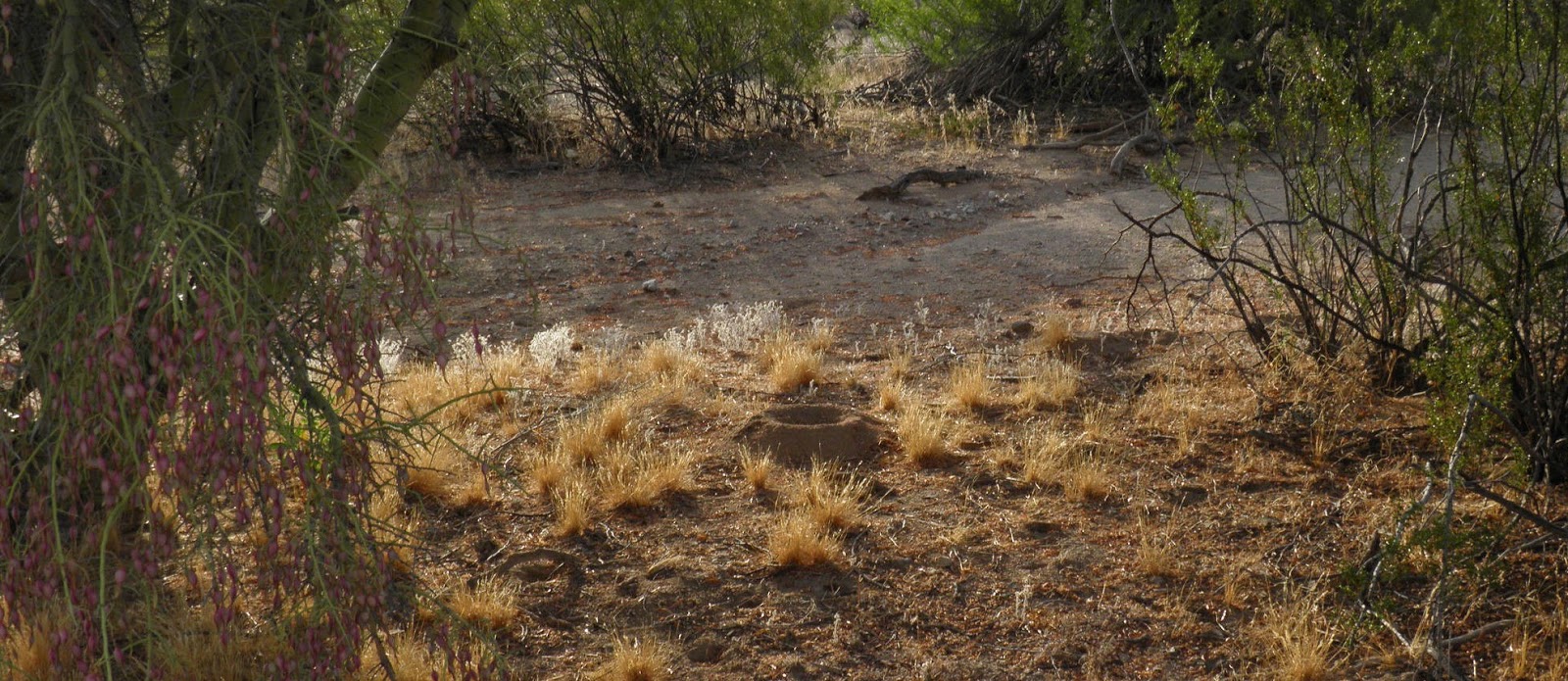
Colonies of this species are huge under-ground cities with many chambers. They are always located in the vicinity of trees, not out in the open. I have watched the mother colony in front of our house for 13 years now. The 'volcanoes' vary in size and location, activity levels around the entrances go up and down, but the colony survives. The swarms appear after a heavy rain fall, sometimes as late as October. All colonies in the neighborhood are active at the same time. But they are so far apart, and the swarms so stationary - exchange between them seems rather unlikely. So are the ants constantly inbreeding?

Entomologists thought that the devoted altruism among colony members is based on the fact that all of the workers are full-sisters, sharing 75% of their genes. Doubts came up when it was discovered that the queens mate with several males, so their offspring might share only 25% of their genes. But if all those males are really just brothers of the queens from the same colony, the off-spring would be related to a much higher degree and altruistic, self-sacrificing behavior would be much more understandable - in the end it's the egoistic gene (-nom) not the egoistic individual.

Monday, July 27, 2015

Comedy of Errors - the identification of narrow, shiny, dark beetles

Three weeks ago I was at the annual Beetle Bash at a friend's house at Cochise Stronghold, Arizona. Many entomologists from Arizona and beyond were attending. Late that evening we set up light traps in the Stronghold itself and I happened to collect a beetle that the experts first claimed to be a Tenebrionid  - and someone wrote down the unfamiliar species name for me. But when I put it under the scope, it clearly was a Carabid with very thin antennae, big mandibles and eyes. It's in the genus Pseudomorpha (Western False-form Beetle) and because of its shape, we sometime call it a 'roach carabid'. It's not very common, but I had found it a couple of times before.


Pseudomorpha (Western False-form Beetle)
About a week later when preparing to do laundry, I found a slip of paper in my pocket with the scientific name Doliodesmus charlesi. I searched my photos and specimens but couldn't find anything it could refer to.  I began to feel really bad about this laps of memory. To make it worse, the species did not exist on BugGuide.com. But I finally found a very bad UAIC image on the SCAN database for ground living insects of the SW mountain ranges. D. charlesi looked quite similar to my roach scarab - and yes, someone had id that one as a teneb at first. Mystery solved. Too bad, the teneb seems even rarer than the carabid.


A few days ago I ran light traps in our drive way here in Picture Rocks, Arizona. A narrow, shiny black beetle with relatively thin antennae was running quickly up the slump block wall at the light. It seemed to be a carabid that I had not seen before, so I took care to photograph and collect it. This time, though, a close-up photo clearly showed the antennae and tarsi of a teneb.

Doliodesmus charlesi
 I posted it on BugGuide where my friend Vassili commented 'not having a bloody clue feels so nice!
antennae so thin, prothorax so transverse, dorsum so shiny.. - i e-mailed Warren Steiner right away.' I hadn't been cheered on like that for a while. But Vassili's description rang a bell - it sounded just like a description of that 'roach carabid' again, except this time I was sure that it was really a teneb. I went in search of that piece of paper, and, not having cleaned my desk in a while, actually found it! Could this be the real Doliodesmus charlesi now? Checking the SCAN web site again, sure, this beetle does look like the distorted old UAIC specimen. So, if it all turns out to be correct, there are no more missing genera in the Diaperinae on BugGuide. Very satisfying.

Saturday, July 18, 2015

How to attract Lizards to you yard?

On Facebook, a question came up: what kind of vegetation to plant to make lizards at home in your yard: First answer: plant and design as natural as possible using native, heat and drought tolerant plants.


 But: Lizards are really not too particular when it comes to vegetation - on the U of A Campus the whiptails hang out around those temporary monocultures of decorative plants that have little ecological value - but they do attract some bugs.


 Tohono Chull Park and even our patio are home to more Desert Spinys than the surrounding pristine desert - even a little irrigation and a few blooming plants offer access to more bugs than the dry sandy areas with nothing but creosote. Desert Spinys also don't scoff at an occasional bite of a juicy tomato or cactus fruit.


The local population of Zebra Tails is obviously happier where there is more loose sand to dig into - away from walking, ground-compacting feet.


The numbers of Side Blotched Lizards go up and down considerably over the years, and it is not easy to see what triggers peaks and valleys. They happily live around groups of creosote bushes where squirrel holes offer them safety when our local Kestrel is hunting.


Buildings seem to be a great replacement for trees when it comes to the needs of Ornate Tree Lizards. During the years of drought, they certainly fared better close to the house than on the Ironwood Trees where they used to live.

Regal Honed Lizards depend on ants, but not even all ants are created equal - on our land the 'Horned Toads' seem to always pop up where Pogonomyrmex rugosa colonies strive. Veromessor pergandei does not seem to have the same attraction.
 

Here on the very west side of Tucson, we have Desert Iguanas. They are big, elegant and very heat tolerant, and vegetarians (partly?). I have seen them climb creosote bushes and even cacti to gnash on flower petals. - They will not appear in masses and eat all your roses, rather they are quite rare and should be enjoyed. 


If your area has Chuck-wallas (south Mountain in Phoenix, Waterman Mts) - they also eat plant material. Again, a rarity.


Gila Monsters probably live in more areas than we know, but they are so rarely active, they seem to go out for a very short time every year. But they can finish a whole nest of rodent youngsters or quail eggs in one meal.
The two last photos are not my own, and I cannot find out where it came from. I apologize!


Some relatives of lizards avoid day light. Mediterranean House Geckos live only around buildings where the were introduced. I am surprised that we have them here on the westside of the Tucson Mountains, but they do hang out around our porch lights where bugs congregate at night.


Our Western Banded Gecko is also night active, but stay on the ground while hunting. During the day they hide out in moist, cool spots, often under flower pots, so don't squish the delicate little guy when you move those around.
 
In summary, what lizards you can 'attract' depends on the  habitat and elevation your yard is in - whether you get Earless Lizards or Zebra Tails, Desert Spiny or Clark's Spiny, Regal or Shorthorned Horned Lizards. Like to all ectoterm animals (regulating their body temperature through behavior rather that sweating or shivering), to lizards, hiding and basking spots are both important, as is the structure of the soil (not too much mulching!). 
Most lizards need to eat insects, so if you plan to spray against any arthropods, even with insect specific toxins, do not expect a healthy reptilian fauna. If your cats and dogs have the run of the yard, they will disturb and diminish the reptile population. 
The very popular decorative crushed rock that covers sterile black plastic foil offers no habitat for anything. 
And finally, much of the plastic fencing used to protect plants from herbivores like rats can be a deathtrap for lizards and snakes, who can push through it in one direction, but not withdraw because their scales trap them in those nooses. 

Wednesday, July 8, 2015

Madera Canyon up close

The view from Proctor Road
The Santa Rita Mountains already received a nice amount of monsoon precipitation. Mark Heitlinger, the manager of the research station in Florida Canyon sent me this encouraging graph.

temperatures and precipitation during June at the SRER in Florida Canyon
When I crossed Madera Creek at  Proctor Road I found only a little trickle of very murky water and no roadside flowers yet. The Mesquite Trees were blooming again and the tall candles of blooming Sotol stood out from the brush. From earlier years, I remember trips with Eric Eaton when it was difficult to make him move on from the overabundance of Hymenoptera and Diptera that usually buzz around these nectar sources. But yesterday, there wasn't much diversity.

The sound of summer and heat - Cicada song
The insects that I did find where all old acquaintances that I had photographed before. So - since I did not need any more documentary shots - this time I went for close-ups, portraits and details.

Mozena sp., Leaf-footed Bug on Mesquite
 All photography is done with my point-and-shoot Olympus SP-800UZ, an ideally light camera for hikes in hot, muggy weather and under threatening storm clouds. The SLR stayed safely tucked away in the car.
 
A Flower Scarab, Euphoria leucographa
There was some activity on the few Desert Broom bushes that have not fallen victim to the strange maniac who goes around year after year and brakes off the most mature and attractive bushes. Why would anybody do this?

Chlorion sp. and Cotinis sp.
 The sweet sap oozing from the bark of some Desert Broom bushes attracts the strangest table fellows and often causes short displays of aggression and dominance. This Chlorion had just chased off a big, clumsy Tarantula Hawk, then shared peacefully with the scarab, only to finally get chased off herself by a horde of marauding ants.

Acanthocephala thomasi, Giant Agave Bug
 Giant Agave Bugs seem to be able to pierce the intact bark to reach the sugar water flow in the phloem of the bush. Often, they actually seem to start the sap flow for everyone else. All extremities of the huge dark bug end in bright orange segments that seem ideal for signaling and posturing.

Polistes dorsalis and E. leucographa
Not all wasps are just snacking on sweets. A Polistes comanche is masticating Marine Blue caterpillar into a package that's easy to carry to a colony full of hungry larvae nearby.


 For years this area close to the ticket booth for Madera Canyon used to be dominated by several colonies of Polistes major, but it seems that they have been replaced by Polistes comanchus this year.


Finding this Leptinotarsa haldemani chomping on the leaves of a bush instead of the usual herbaceous Nightshades surprised me until I realized that it is Lycium pallidum – Wolf Berry, or Pale Desert-thorn - in the family Solanaceae. Still to me it's a new host for this beetle.


Brightly aposematic Leaf Beetles, Lema trabeata, are using a Datura Plant to provide for their offspring. A reliable source of juicy leaves and protective alkaloids if the monsoon holds its promise.


Zygogramma piceicollis pairs are hiding in Asteraceae that are shooting up now and will soon produce yellow flowers and later those annoying black, elongate seeds that seem to be waiting for entomologists swinging insect nets as their chosen form of distribution. I hope the beetles and their larvae are very hungry!

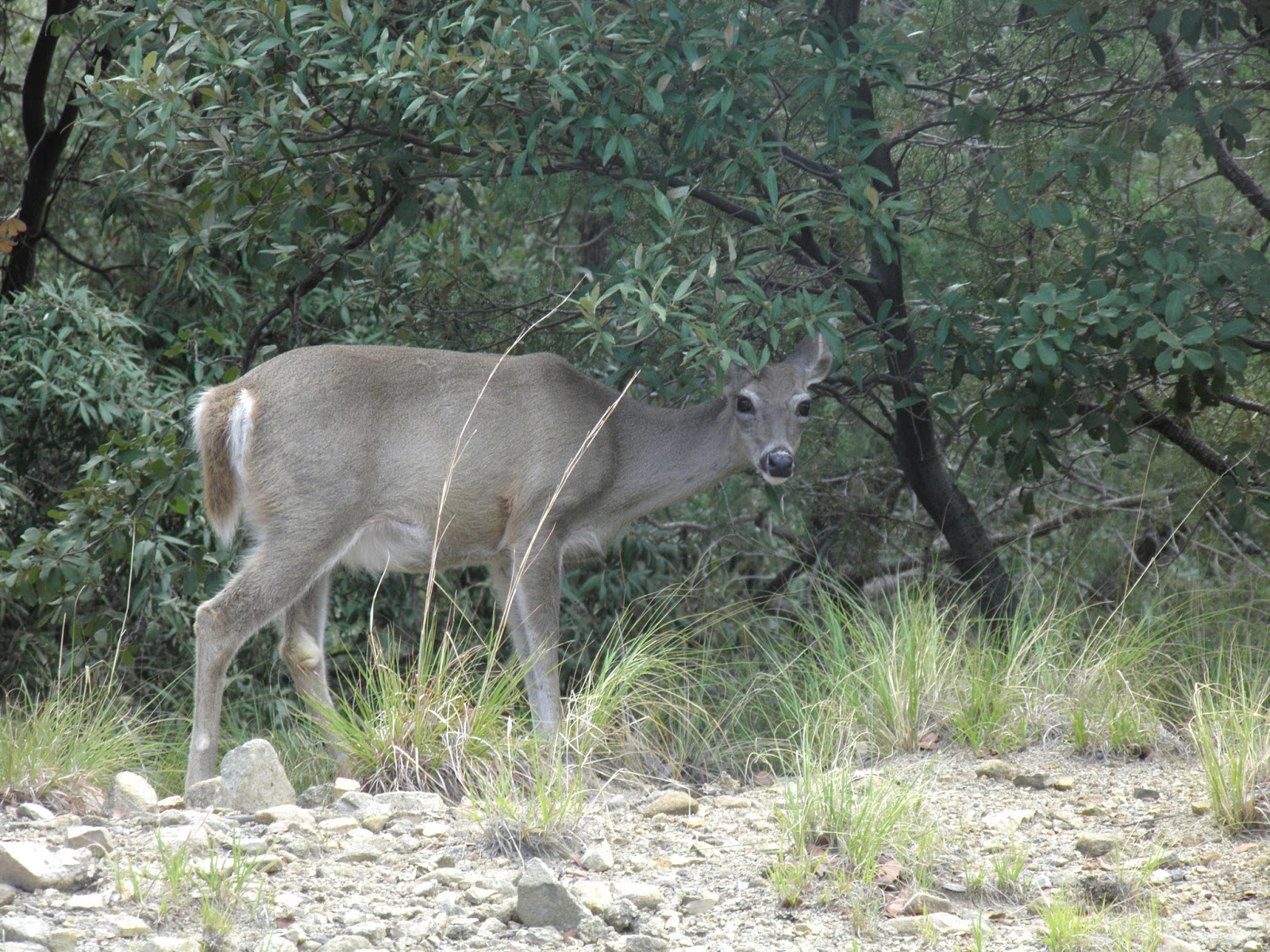
White Tail Deer grazing under Silver Leaf Oaks
 After several couple of hours in the low grassland at over 90 degrees Fahrenheit and, as it feels, over 90 percent humidity (it actually rained a couple of times), 80 Degrees at the upper Mt Baldy trail head are refreshing and cool. Ceanothus greggii is still blooming, but many of the plants have been destroyed by mud slides last year.


A hunter is hanging out among the small flowers: a small ambush bug in the genus Phymata. Waiting motionless for prey to walk into the reach of it's short, strong raptorial arms, it is ready to take on prey several times its size. Brachial power is not its only weapon: its bite will quickly paralyze its prey. 


The usual mass orgy of Rose Chafers is still ongoing and beetles are flying around their wings catching the afternoon sun and their long legs trailing.
 

Soon several species of red Net-winged Beetles (genus Lycus) will join them and buzz around the oaks in great numbers, but this time I only see a couple of individuals.


Weevils in the genus Pandeleteius nibble on the tips of oak leaves. They look like spiders from afar, but close up they always remind me of Popeye  after a good meal of spinach.


Weevils in the genus Curculio are extremely difficult to identify to the species, but I feel some justification in calling this one an Acorn Curculio. I usually see them at the black lighting sheet and never realized how well their subtle pattern matches that of a young acorn.


A persistent irritation under my shirt drove me into the privacy of the trail head restroom. The culprit: a rather large tick that obviously had not found a spot that it liked. Luckily. We don't seem to be in an area with a lot of Lyme disease here, but a tick bite is never pleasant. Trying to identify the tick, I end up with the eastern genus  Amblyomma. Now I wished I had collected the specimen as a voucher because that would be a considerable range extension for that genus.   

Thursday, July 2, 2015

Toads and Dogs


Here in Arizona we are anxiously waiting for the beginning of the monsoon. We already have high humidity, dust storms, dramatic clouds and black skies at times. But no real measurable rain yet, at least not on the west side of the Tucson Mountains. Of course, the wildlife around us is waiting more eagerly than we humans with our access to CAP water and ground water delivered from every faucet. Amphibians like toads, frogs, and spadefoots are hidden under ground during the dry season and emerge when water might be available. They need to keep their bodies moist because their skin is quite permeable - they breath through it and can absorb, but also loose, water. Even more than the adults the eggs and larvae of amphibians (tadpoles) depend on water. Some of our desert species are masters in utilizing very temporary puddles that only lat for a few days for their offspring. Those species, like red-spotted toads and spadefoots have produced quite a lot of offspring last year. But the big Colorado River Toads, or better now Sonoran Desert Toads (after their western most populations are disappearing) need more than just a puddle, they need at least a small pond to mate, lay their strings of eggs and for their tadpoles to reach maturity. Nevertheless, we have at least half a dozen of those prehistoric looking giants between our and our neighbors property. The probably have not bred in decades. But the individuals survive and eat  bugs nightly under all our porch lights and my black light.
These toads have a terrible reputation with dog owners and concerned parents because they produce potent psychedelic and toxic secretions from glands in their skin.
Wikipedia: 'Just behind the large golden eye with horizontal pupil is a bulging kidney-shaped parotoid gland. Below this is a large circular pale green area which is the tympanum or ear drum. By the corner of the mouth there is a white wart and there are white glands on the legs. All these glands produce toxic secretions. Dogs that have attacked toads have been paralyzed or even killed.'
The cocktail of chemicals produced by these glands contains among other toxins 5-MeO-DMT (5-methoxy-N,N-dimethyltryptamine) is a powerful psychedelic tryptamine. This had brought them to the attention of seekers of highs among humans - and dogs.


My best dog ever, Cody, discovered the toads when he was young. The first encounter was scary - his heart raced out of control and his breathing became labored. (no foaming from the mouth). But after that first time which ended at the vet's office  (Cody was already fine again when we got there), he seemed to like the effect and know how to dose it. So once a year early in the toad season, he would show up with his hair standing on end, very happily swaggering and humping everything in his reach (something he did not usually do). A dead toad would be somewhere in his wake. He eventually outgrew this behavior and paid no attention at all to the surviving toads that were always drawn to bird baths and dog tub. Our 5 other dogs always completely ignored the toads. So the danger from the toads to smaller dogs or unlucky individuals is certainly real, but nobody should overreact and try to eradicate the toads. Remember, they were here fist, they are surviving in a very difficult environment, they may be the only ones that actually eat the big Palo Verde Root Borers.  Different from rattlesnakes, Sonoran Desert Toads will never make any aggressive advances towards the dogs. They only want to be left alone. ... The skin secretion is also an irritant to mucous membranes, and most dogs will realize that and back off after the first contact.  Any reasonably smart dog can learn to stay away from the toads with some training and supervision.  You can never be sure that you eradicated every single toad from your yard. But you should be able to control your pets.
The smaller species like Woodhouse's Toad, Great Plains Toad, and Red-spotted Toad are not, or only mildly toxic and pose no threat. Still, I see a lot of hysteria in public forums that targets even those harmless guys.